
Behold the new gate keeper: 7 crucial things to know about Oritsemeyiwa Eyesan, Nigeria’s new oil gate keeper.
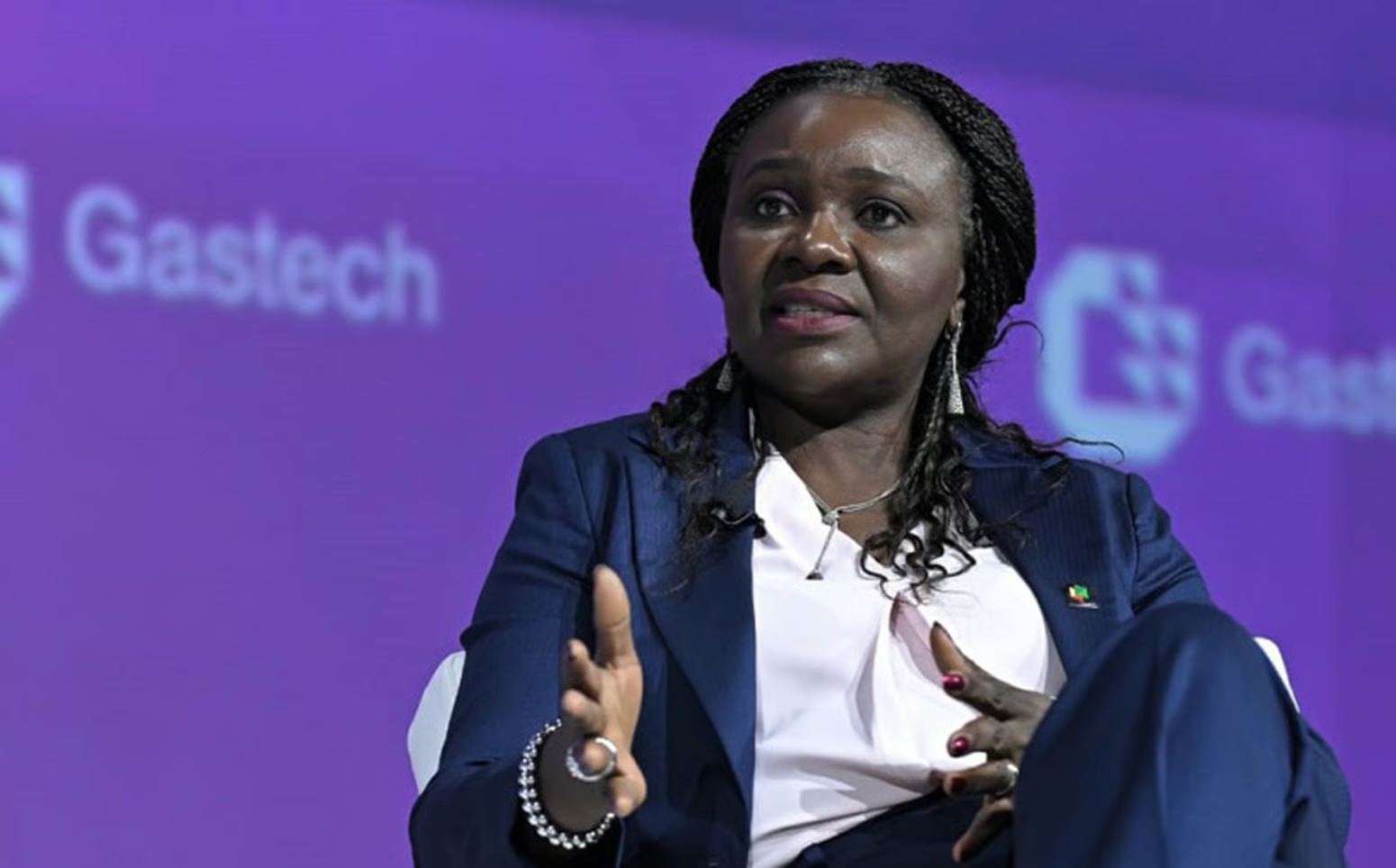
President Bola Tinubu has nominated Oritsemeyiwa Eyesan as chief executive of the Nigerian Upstream Petroleum Regulatory Commission (NUPRC), selecting a three-decade oil industry veteran to help the West African nation reverse years of production decline and unlock billions in stalled investments.
Eyesan, currently executive vice president for Upstream at Nigerian National Petroleum Company Limited, will lead the Nigerian Upstream Petroleum Regulatory Commission if confirmed by the Senate.
The nomination follows the resignation of Gbenga Komolafe, who departed the agency he led since its 2021 establishment under the landmark Petroleum Industry Act.
“Madam Eyesan’s return is extremely good news for Nigeria’s energy sector,” said Clementine Wallop, director for sub-Saharan Africa at Horizon Engage. “She is a high-calibre executive whose skills will be instrumental in the success of the bid round and the wider changes planned for 2026. She is well-liked across the industry, both local and international. The NUPRC should flourish under her leadership.”
The appointment positions Eyesan at the center of Nigeria’s efforts to boost crude output to 3 million barrels per day and attract capital to develop reserves holding 37.28 billion barrels of oil and 210.54 trillion cubic feet of natural gas.
Eyesan brings institutional knowledge accumulated across 33 years with NNPC and its subsidiaries. A University of Benin economics graduate, she joined the state oil company in 1992 as a material traffic officer, climbing through planning, commercial, and executive roles to reach the apex of upstream operations.
She played key roles in negotiating complex agreements, including Nigeria’s first natural gas liquids commercialisation and the renewal of deepwater production-sharing contracts that unlocked $10 billion in investments.
The NUPRC emerged from the 2021 Petroleum Industry Act, which restructured Nigeria’s oil governance after years of legislative delays. The commission replaced the upstream division of the Department of Petroleum Resources, gaining expanded powers over licensing, technical standards, and fiscal oversight.
Under Komolafe’s leadership, the agency pushed reforms to streamline permitting, improve transparency in crude loading procedures, and combat theft that has plagued production. The commission recently launched initiatives to add one million barrels per day to output within two years, collaborating with operators and security agencies to reduce losses.
The timing of Eyesan’s appointment is therefore highly significant. Global investors are increasingly selective, and competition for capital is intensifying across frontier and established markets. Regulatory credibility, transparency and predictability are now decisive factors. One of the greatest deterrents to investment in Nigeria has been slow or unpredictable regulatory approval processes, including lengthy permitting timelines, unclear requirements and frequent changes that stall projects and undermine returns.
“If Nigeria wants to compete for scarce foreign investment, the NUPRC must demonstrate that the country’s oil and gas sector is stable, predictable and commercially attractive. By learning from regional leaders such as Angola’s ANPG, the NUPRC can streamline approvals, establish transparent regulatory frameworks with firm timelines, and implement fast, direct communication channels with Nigerian and international investors,” Ayuk added. “We are confident that Eyesan will accomplish this and give the private sector the confidence needed to make Nigeria Oil and Gas the best place to invest in West Africa and by extension Africa.



https://shorturl.fm/r18Xe